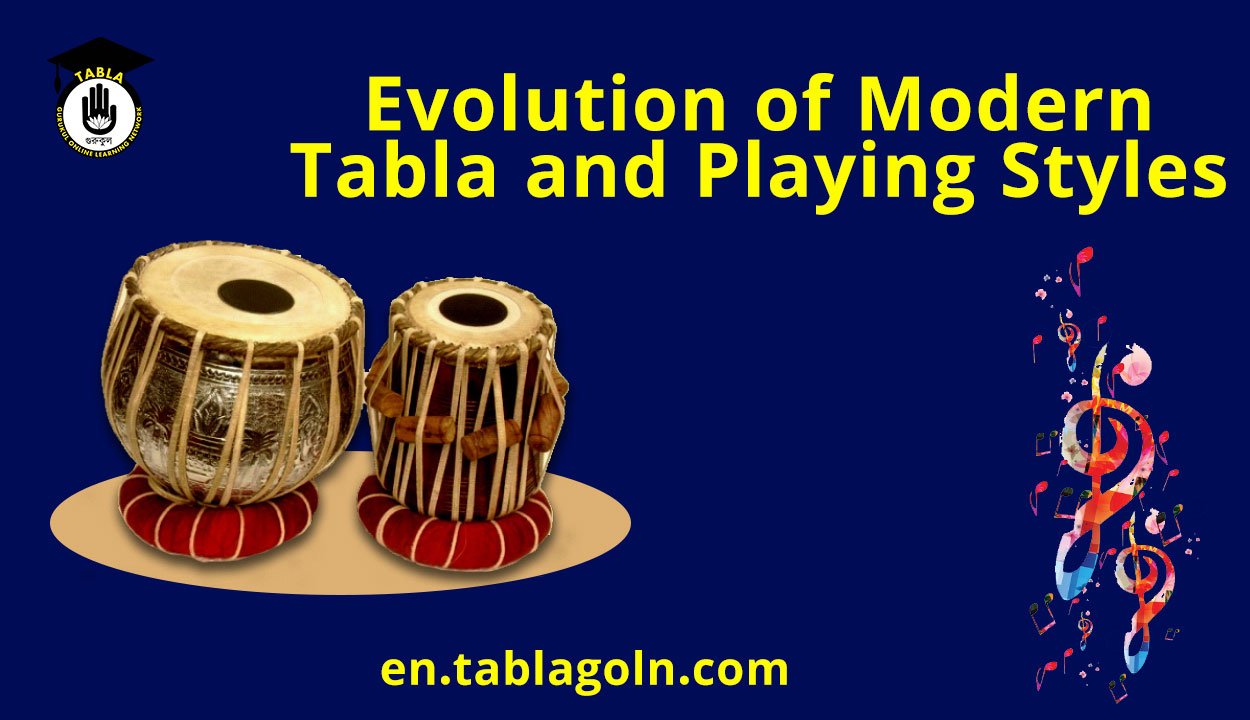
Evolution of Modern Tabla and Playing Styles. The tabla, an iconic percussion instrument in Indian classical music, has a rich history and has undergone significant evolution in its construction, playing techniques, and stylistic approaches over the centuries. This article delves into the fascinating journey of the modern tabla and its playing styles, highlighting key developments and influences that have shaped its current form.

Evolution of Modern Tabla and Playing Styles
Origins and Early Development
The origins of the tabla are shrouded in mystery, with various theories suggesting different roots. One popular theory attributes the invention of the tabla to Amir Khusrau, a 13th-century poet and musician at the court of Sultan Alauddin Khilji. It is believed that Khusrau created the tabla by splitting the pakhawaj, a larger barrel-shaped drum, into two smaller drums. This allowed for greater rhythmic complexity and flexibility in playing.
Another theory suggests that the tabla evolved from ancient Indian drums like the mridangam or the dholak, gradually adapting to the needs of classical music and dance performances. Regardless of its exact origins, by the 18th century, the tabla had firmly established itself as a prominent instrument in the North Indian classical music tradition, known as Hindustani classical music.
Construction and Design
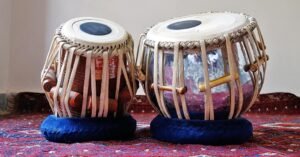
The modern tabla consists of two drums: the smaller dayan (meaning “right”), typically played with the right hand, and the larger bayan (meaning “left”), played with the left hand. The dayan is usually made of wood, while the bayan is crafted from metal, clay, or wood. Both drums are covered with goat or calfskin heads, with a black central spot known as the syahi, made from a mixture of soot, rice paste, and iron filings. This syahi is crucial in producing the distinct tonal qualities of the tabla.
Over time, the construction of the tabla has been refined to enhance its sound quality and durability. Skilled artisans meticulously craft the drum shells, ensuring that the tension of the skins is evenly distributed, which is essential for producing the characteristic rich tones of the instrument. The evolution of the tabla’s construction has significantly influenced its playing styles, enabling a broader range of sounds and greater expressive capabilities.
Development of Playing Styles (Gharanas)
The evolution of the tabla is closely linked to the development of distinct playing styles, known as gharanas. Gharanas are schools or traditions of music that have developed over generations, each with its unique approach to rhythm, technique, and repertoire. The main tabla gharanas include the Delhi, Ajrada, Lucknow, Farukhabad, Benares, and Punjab gharanas.
1. Delhi Gharana:
The Delhi gharana is one of the oldest and most influential tabla gharanas. It emphasizes clarity of sound, precise timing, and the use of balanced bols (syllables or strokes). The Delhi style is known for its focus on kayda (a type of rhythmic pattern) and its methodical, mathematical approach to rhythm.
2. Ajrada Gharana:
The Ajrada gharana is closely related to the Delhi gharana but has its distinctive features. It is known for its complex rhythmic patterns and the use of syncopation. The Ajrada style often incorporates intricate compositions that challenge both the performer and the listener.
3. Lucknow Gharana:
The Lucknow gharana is renowned for its emphasis on grace and beauty in playing. It often incorporates softer strokes and ornamentation, making it well-suited for accompaniment in dance performances, particularly Kathak. The Lucknow style is also noted for its use of the “laggi” and “tukra,” which are fast-paced and intricate rhythmic phrases.
4. Farukhabad Gharana:
The Farukhabad gharana blends elements of both the Delhi and Lucknow styles. It is known for its versatility, with a repertoire that includes a wide range of compositions from various gharanas. The Farukhabad style is characterized by its fluidity and adaptability, making it a favorite among many tabla players.
5. Benares Gharana:
The Benares gharana, also known as the Purbi (Eastern) gharana, is famous for its robust and powerful playing style. It is closely associated with the temple music of Varanasi (Benares) and often features bold, resonant strokes. The Benares style is also known for its use of fixed compositions, known as “gat” and “chakradar,” which are often played with great dynamism and energy.
6. Punjab Gharana:
The Punjab gharana is known for its unique approach to tabla playing, which emphasizes the use of the bayan to produce deep, resonant bass sounds. This style often features complex, multi-layered rhythms and is closely associated with the classical music of Punjab as well as folk traditions like Bhangra. The Punjab gharana is also recognized for its elaborate “tihai” patterns, which are rhythmic phrases repeated thrice to conclude a section.
Modern Influences and Globalization
In the 20th century, the tabla experienced a renaissance, thanks in part to the global spread of Indian classical music. Pioneering artists like Ustad Alla Rakha, Pandit Kishan Maharaj, and Ustad Zakir Hussain brought the tabla to international audiences, showcasing its versatility and depth. These maestros not only preserved traditional playing styles but also experimented with new forms, blending the tabla with various musical genres, including jazz, rock, and fusion.
The globalization of the tabla has led to the emergence of new playing techniques and styles. Tabla players today are increasingly exploring cross-cultural collaborations, incorporating elements from Western music and other world traditions. This has expanded the instrument’s reach and appeal, attracting a new generation of musicians and listeners.
The evolution of the modern tabla and its playing styles is a testament to the instrument’s adaptability and enduring appeal. From its mysterious origins to its current status as a global musical icon, the tabla has continually evolved, absorbing influences from various cultures and traditions while maintaining its deep roots in Indian classical music. The rich diversity of tabla gharanas, each with its distinct approach to rhythm and sound, ensures that the instrument remains vibrant and dynamic. As the world of music continues to evolve, the tabla will undoubtedly continue to inspire and captivate audiences around the globe, demonstrating its timeless relevance and versatility.