
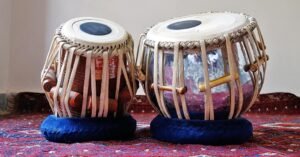
The tabla, a prominent percussion instrument in Indian classical music, is renowned for its intricate rhythms and versatility. Traditionally taught and performed through oral transmission, the advent of written notation has provided a valuable tool for students and enthusiasts. Tabla sheet music, also known as “bols” notation, allows for the precise recording and sharing of tabla compositions, making learning and preserving this art form more accessible. This article explores the significance of tabla sheet music, how to read it, and its benefits for both beginners and advanced players.
Tabla Sheet Music: Understanding and Utilizing Notation for Mastery
The Importance of Tabla Sheet Music
Preserving Traditional Compositions
Tabla compositions, or “bandishes,” are often complex and passed down through generations orally. Written notation helps preserve these traditional compositions accurately, ensuring that the nuances and intricacies are not lost over time.
Enhancing Learning and Practice
For students, tabla sheet music provides a visual aid that complements oral instruction. It helps in memorizing compositions, understanding structure, and maintaining rhythm. Sheet music allows for consistent practice, enabling students to refer back to the exact compositions taught by their teachers.
Facilitating Global Dissemination
With the increasing global interest in tabla, written notation serves as a universal language. It enables enthusiasts and musicians worldwide to learn and practice tabla compositions accurately, even if they do not have immediate access to a teacher.
Understanding Tabla Notation
The Basics of Bols
The fundamental units of tabla music are called “bols.” Each bol represents a specific stroke or combination of strokes played on the tabla. Some common bols include:
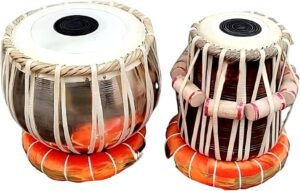
– Na/Tha: Played on the daya (right drum) with fingers.
– Tin: Played on the daya with the index finger.
– Dha: A combination of Na and Ge, played on both drums.
– Ge: Played on the baya (left drum) with the fingers or palm.
– Te/Ke: Played on the daya with a flicking motion.
Structure of Compositions
Tabla compositions are structured in rhythmic cycles called “tala.” Each tala consists of a specific number of beats, divided into smaller sections called “vibhags.” Some common talas include:
– Teentaal: A 16-beat cycle, divided into four sections of four beats each.
– Ektaal: A 12-beat cycle, divided into six sections of two beats each.
– Jhaptaal: A 10-beat cycle, divided into four sections (2+3+2+3).
Notation Symbols
Tabla sheet music uses a combination of symbols and syllables to represent different strokes and compositions. Some common notation symbols include:
– X (Sam): Indicates the first beat of the cycle, often emphasized.
– O (Khaali): Indicates a silent beat or a beat played only on the daya.
– |: Separates vibhags (sections) within a tala.
Reading a Tabla Composition
Here is an example of a simple composition in Teentaal:
“`
Dha | Dhin Dhin | Dha | Dha
Dha | Dhin Dhin | Dha | Dha
Na | Tin Tin | Na | Na
Dha | Dhin Dhin | Dha | Dha
“`
– Each line represents one cycle of Teentaal.
– The vertical bars (|) separate the vibhags (sections) within the cycle.
– The syllables (bols) indicate the strokes to be played.
Benefits of Using Tabla Sheet Music
Precision and Accuracy
Tabla sheet music provides precise notation, ensuring that compositions are learned and performed accurately. This helps maintain the integrity of traditional compositions and allows for consistent practice.
Aiding Memory and Understanding
Written notation serves as a reference for students, aiding memory and reinforcing understanding. It helps students grasp the structure and rhythm of compositions, making complex patterns easier to learn and remember.
Enabling Self-Learning
For those who do not have immediate access to a teacher, tabla sheet music is an invaluable resource. It allows for self-paced learning, enabling students to practice and improve their skills independently.
Tips for Using Tabla Sheet Music
1. Start with Simple Compositions:
– Begin with basic talas and simple compositions to build a strong foundation. Gradually progress to more complex patterns as you gain confidence.
2. Combine Oral and Written Learning:
– Use sheet music as a complement to oral instruction. Listen to recordings and practice along with your teacher to develop a well-rounded understanding.
3. Regular Practice:
– Consistent practice is key to mastering tabla. Use sheet music to guide your practice sessions, focusing on accuracy and rhythm.
4. Record and Review:
– Record your practice sessions and compare them with the notation. Reviewing your recordings helps identify areas for improvement and ensures you are playing correctly.
5. Collaborate with Others:
– Play along with other musicians or in ensembles to enhance your timing and coordination. Using sheet music in group settings helps maintain synchronization and rhythm.

Tabla sheet music is a powerful tool that enhances the learning, preservation, and global dissemination of this intricate percussion instrument. By providing a precise and accessible means of recording and sharing compositions, it ensures that the rich tradition of tabla music continues to thrive. Whether you are a beginner or an advanced player, incorporating sheet music into your practice routine can significantly improve your skills and deepen your understanding of tabla. With dedication and consistent practice, tabla sheet music can help you master this beautiful and complex instrument, allowing you to contribute to its rich legacy.